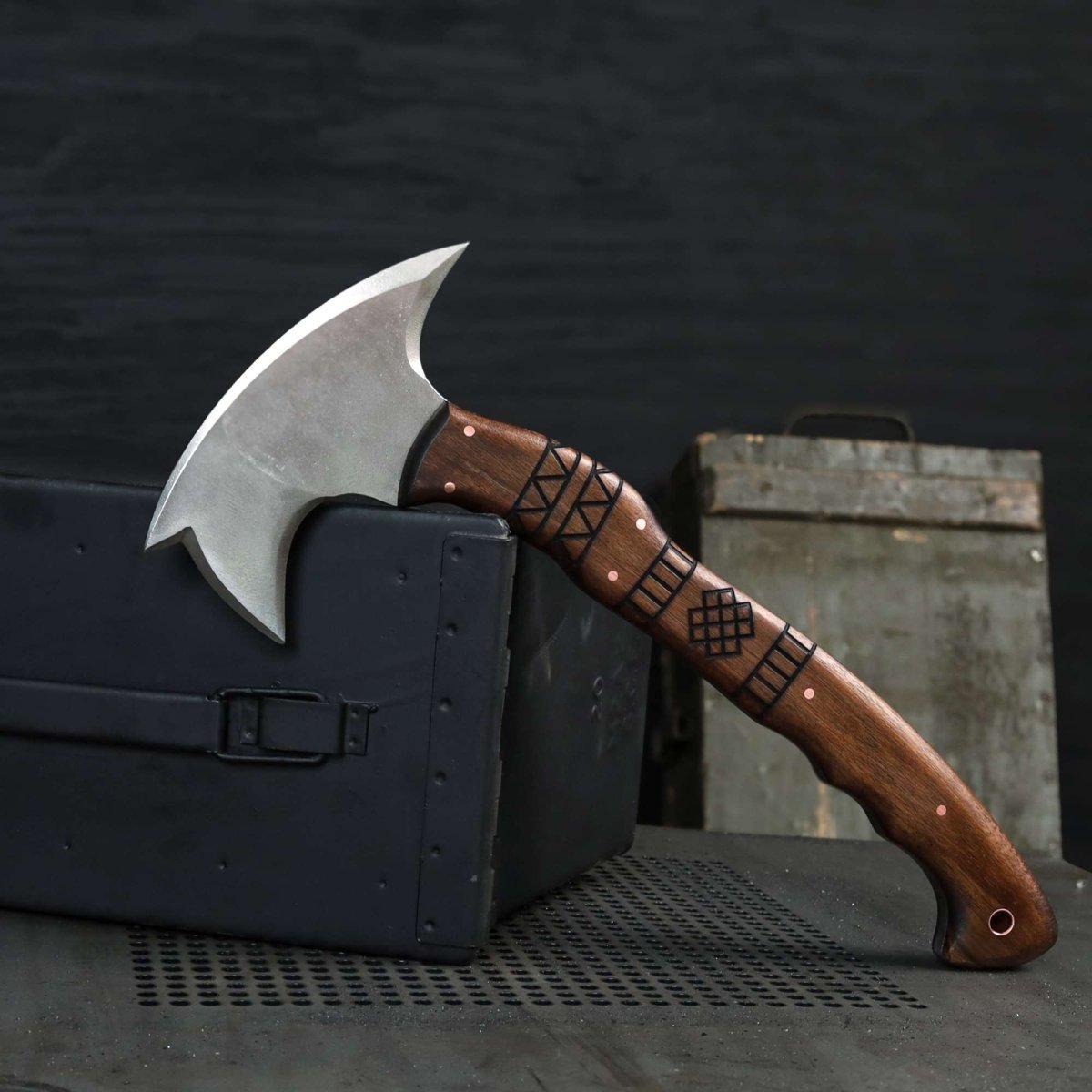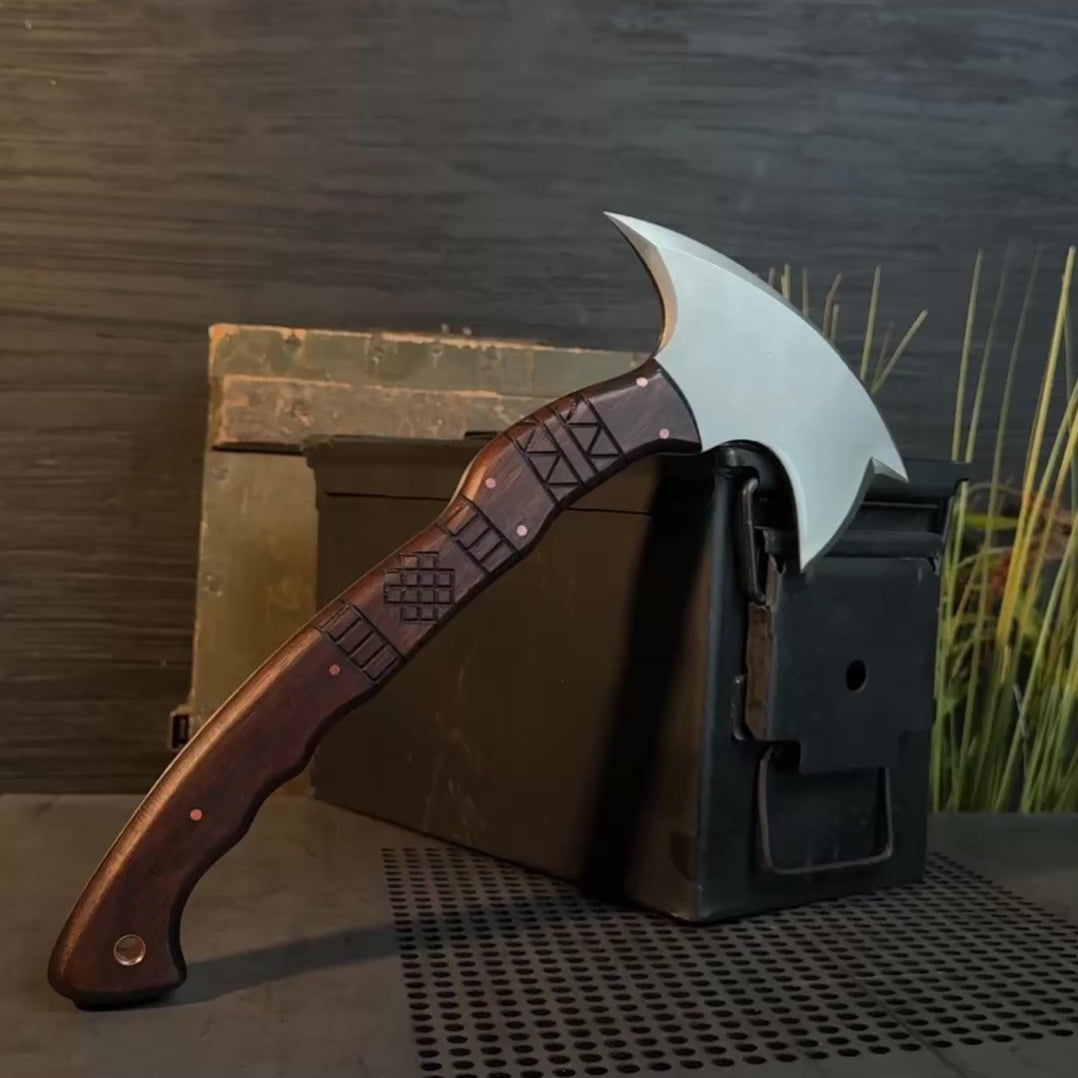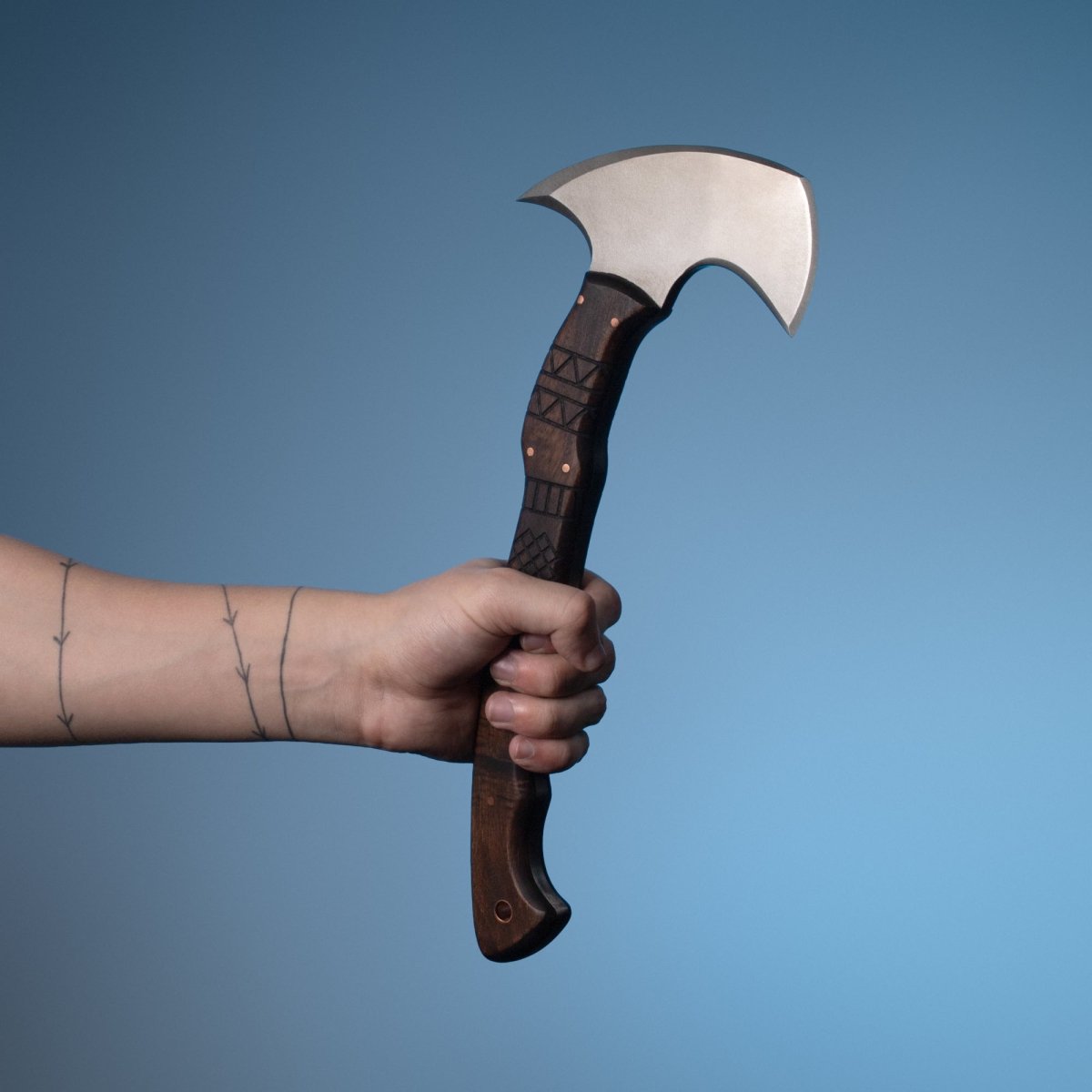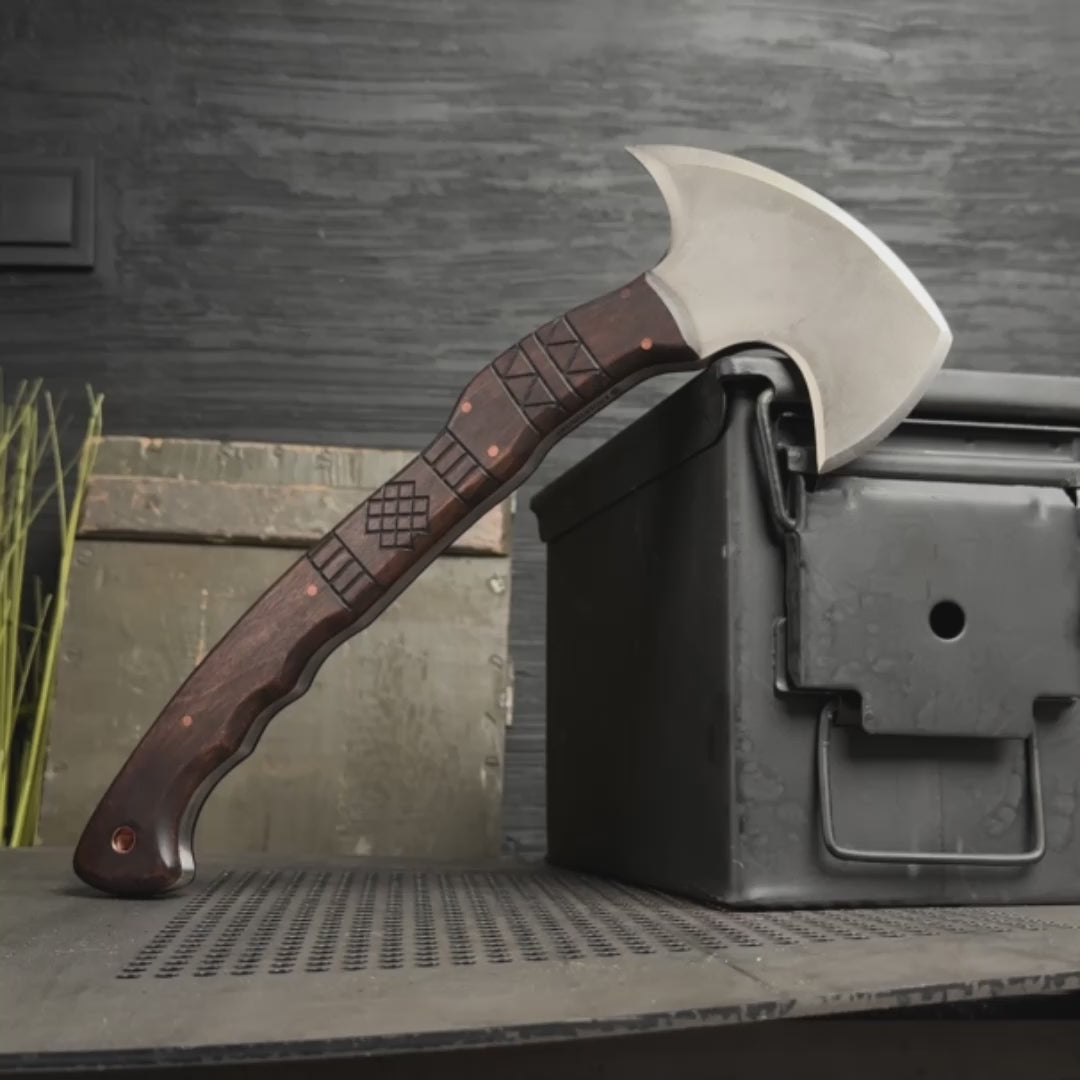

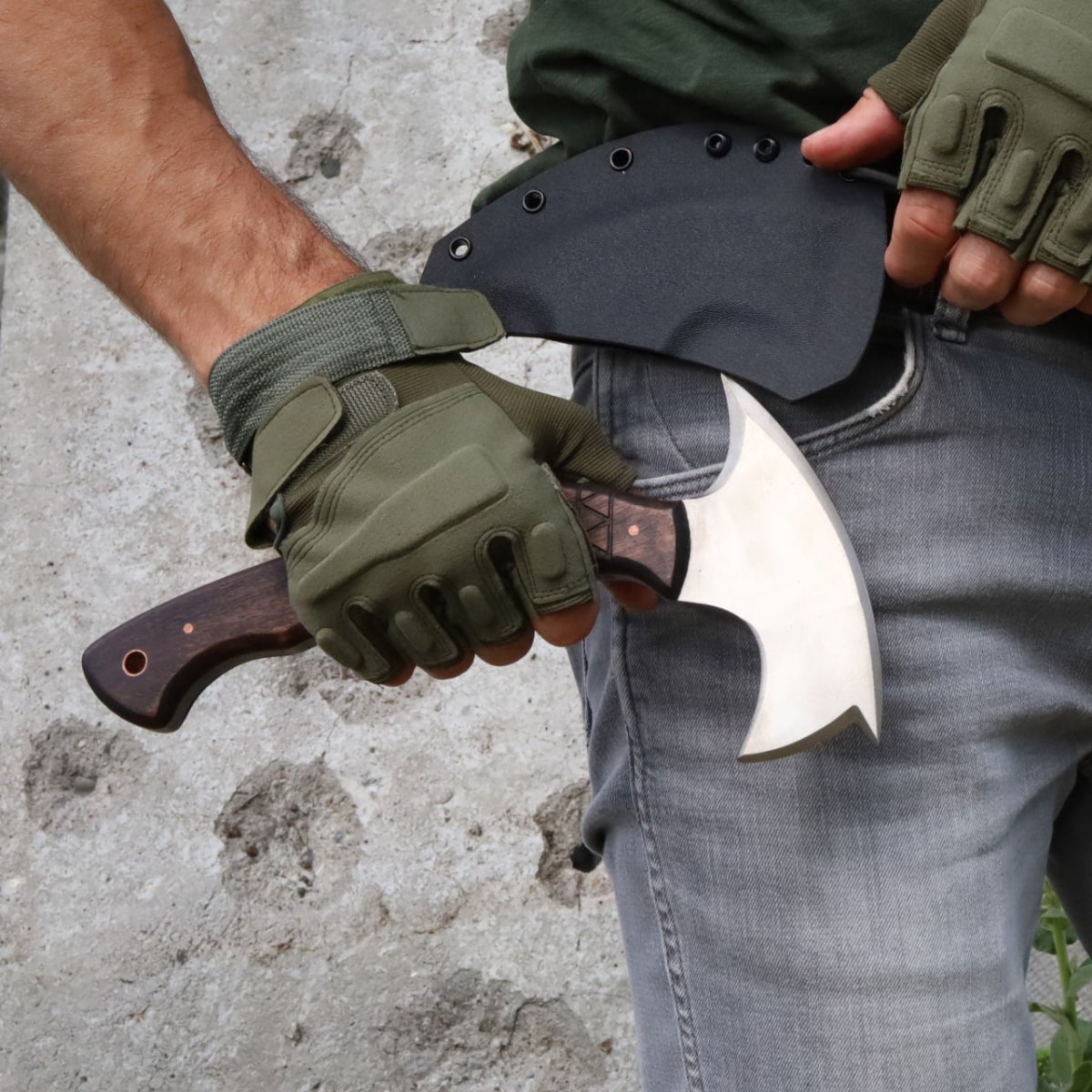
Moderne taktische Tomahawks: Warum sie so aussehen, wie sie es tun
Moderne taktische Tomahawks unterscheiden sich stark von traditionellen Äxten oder historischen Wikingerschwertern. Ihre Formen wirken aggressiv oder futuristisch, doch fast jedes Detail hat einen Zweck. Von der Geometrie des Kopfes bis zur Wahl des Griffmaterials sind moderne Tomahawks auf Funktionalität, Haltbarkeit und Vielseitigkeit ausgelegt.
Heute werden taktische Tomahawks von Militärangehörigen, Survival-Enthusiasten, Outdoor-Fans, Rettungsteams und Sammlern genutzt. Aber was macht sie eigentlich „taktisch“ und warum haben sie so ungewöhnliche Formen?
Warum taktische Tomahawks kompakte Köpfe haben
Im Gegensatz zu großen Hackäxten sind taktische Tomahawks auf Schnelligkeit und Wendigkeit ausgelegt. Ihre Köpfe sind meist kleiner und leichter, was eine schnelle Handhabung mit einer Hand ermöglicht.
Dieses kompakte Design bietet mehrere Vorteile:
- schnellere Bewegung und Erholung nach Schlägen
- leichteres Tragen an Ausrüstung oder Rucksäcken
- bessere Kontrolle in engen Umgebungen
- Vielseitigkeit für praktische Aufgaben

Anstatt rohe Hackkraft zu maximieren, setzen taktische Tomahawks auf Präzision, Geschwindigkeit und Anpassungsfähigkeit.
Warum manche taktische Tomahawks Spitzen haben
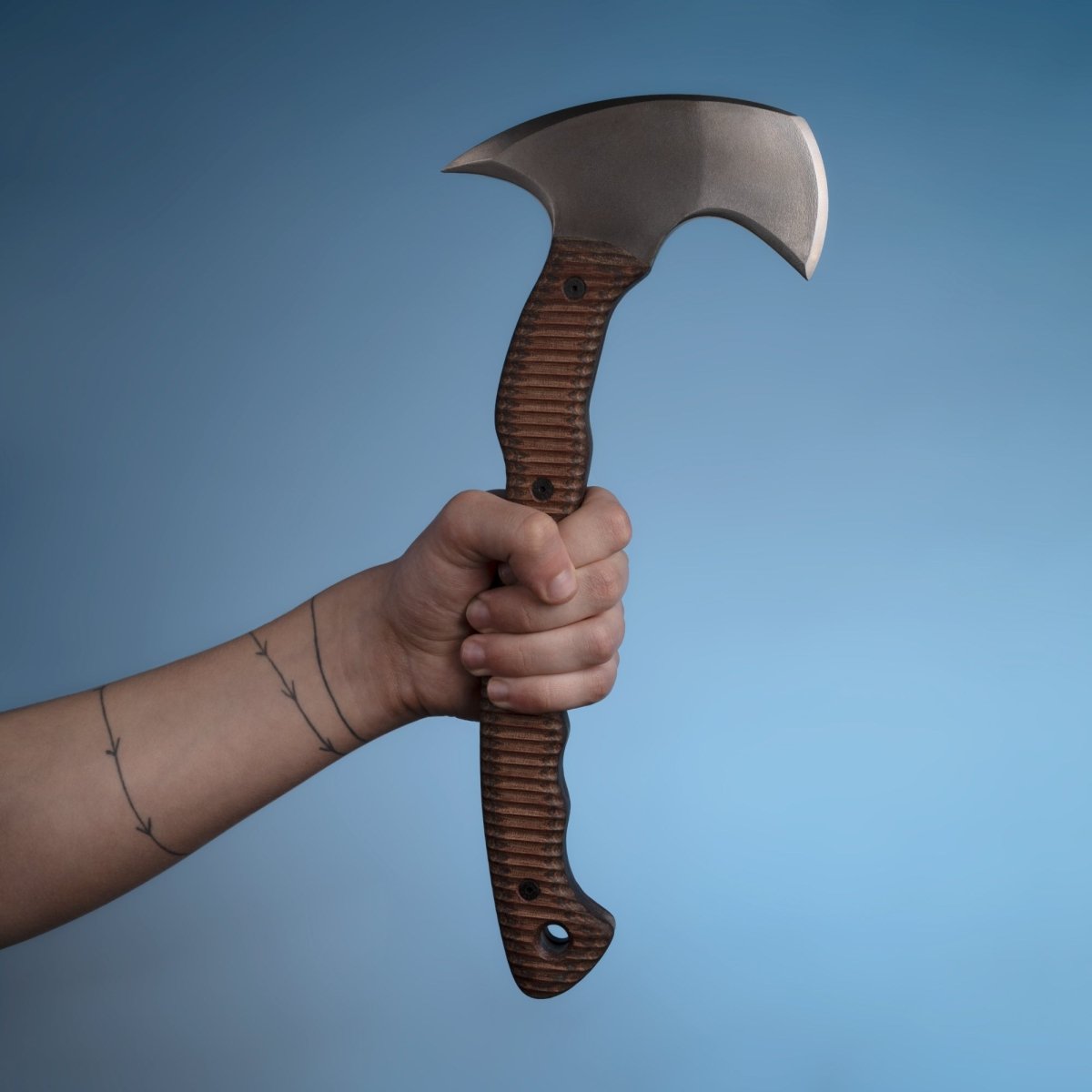
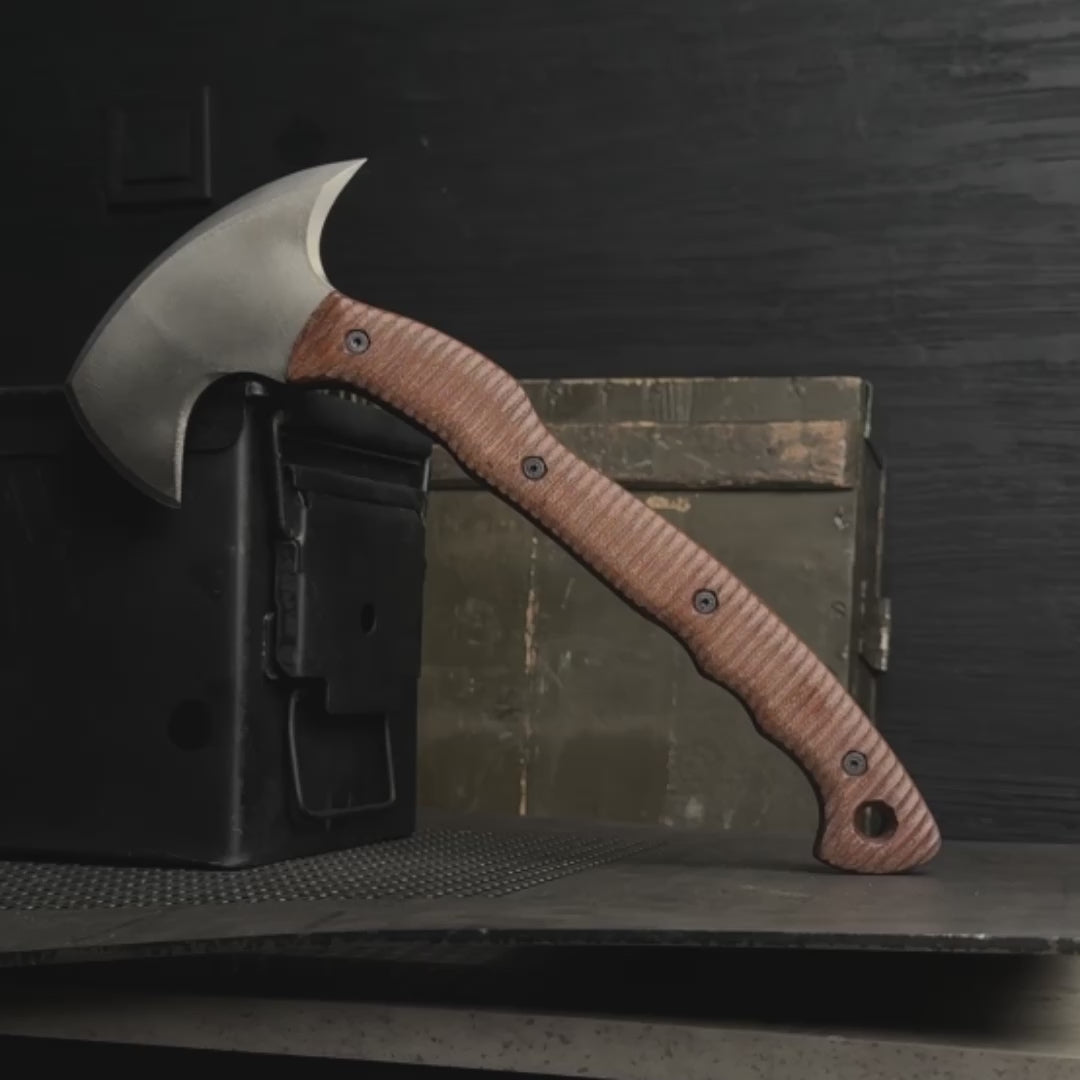
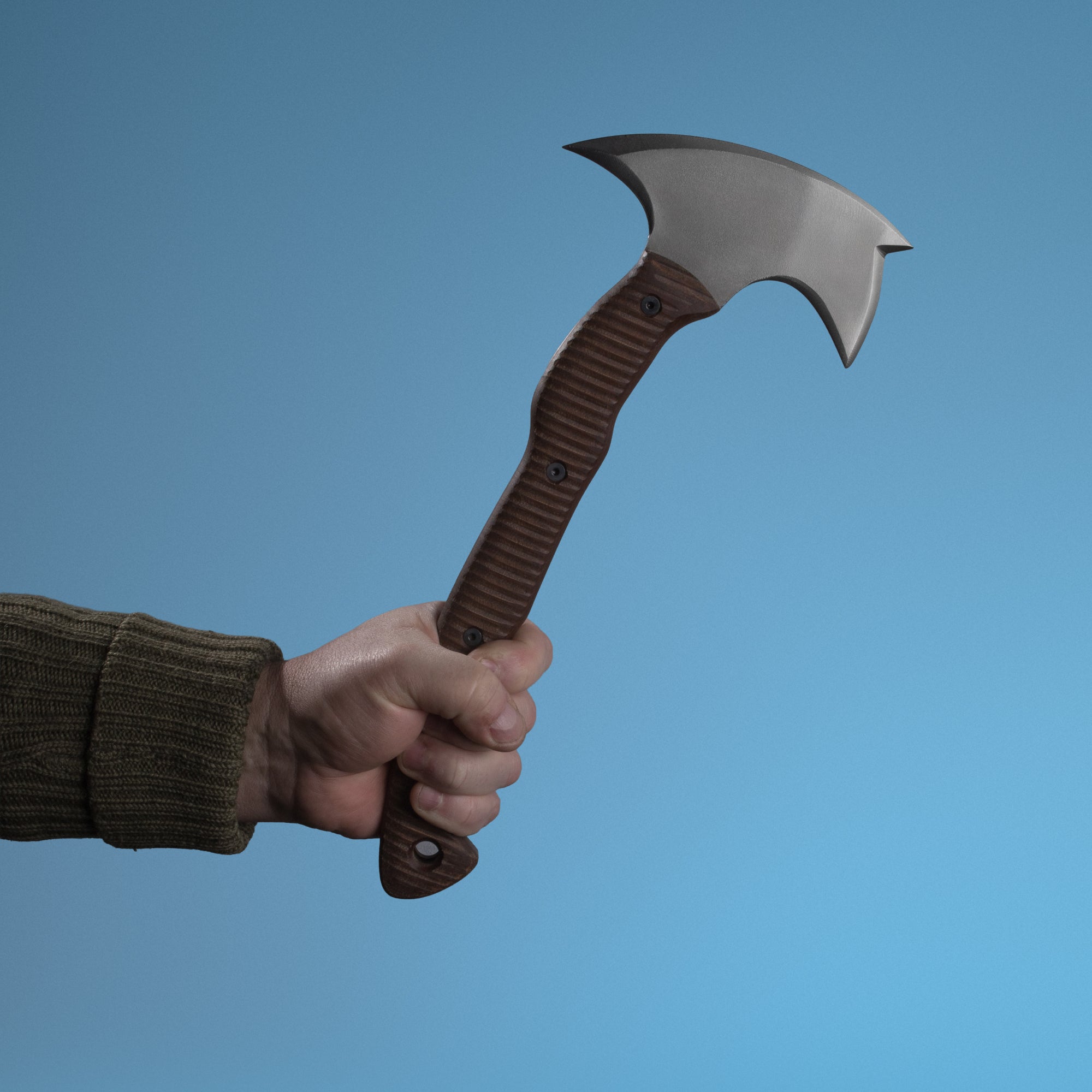
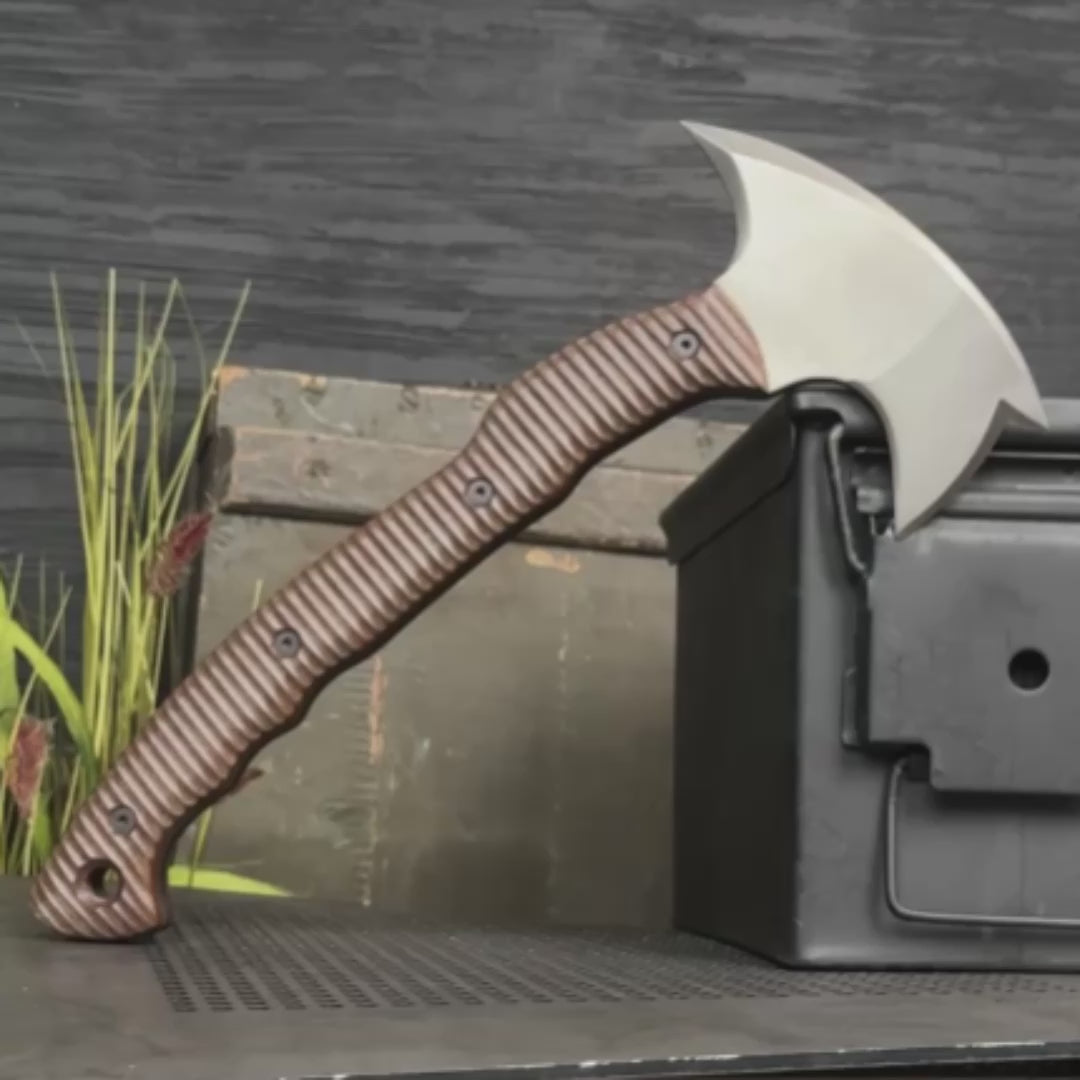
Eines der markantesten Merkmale ist die hintere Spitze. Manche Tomahawks haben flache Hammerköpfe, andere scharf aussehende Spitzen.

Die Spitze ist nicht primär als Messerklinge gedacht. Stattdessen erfüllt sie mehrere praktische Funktionen:
- harte Materialien durchdringen
- dünne Barrieren durchbrechen
- Kraft auf einen kleinen Punkt konzentrieren
- Materialien einhaken oder ziehen
Diese Form ermöglicht es dem Werkzeug, Energie sehr effizient zu übertragen.
Warum die Spitze normalerweise nicht wie ein Messer geschärft wird
Viele glauben, die Spitze sollte rasiermesserscharf sein, aber die meisten taktischen Tomahawks vermeiden bewusst eine messerähnliche Schärfung.
Dafür gibt es mehrere Gründe:
- eine dünne Schneide würde bei Stößen schnell absplittern oder stumpf werden
- dickere Geometrie verbessert die strukturelle Festigkeit
- Taktische Spitzen sind für das Eindringen durch Kraft ausgelegt, nicht zum Schneiden
Anstelle einer Messerschneide verfügt der Spieß typischerweise über eine verstärkte Spitze mit robuster Geometrie, die wiederholte Stöße ohne Schaden aushält.

Der Schleifwinkel ist meist viel steiler als bei einem Messer – optimiert für Haltbarkeit statt feines Schneiden.
Klingengeometrie: Warum die Klinge anders aussieht
Moderne Tomahawks verwenden oft eine dickere Klingengeometrie als traditionelle Äxte. Das verbessert:
- Widerstand gegen Absplitterungen
- Haltbarkeit bei starker Beanspruchung
- Strukturelle Integrität bei Stößen

Einige taktische Tomahawks legen Wert auf Schneidleistung, andere eher auf Durchbruch- oder Nutzungsfunktionen. Deshalb können sich die Schneidenprofile je nach Verwendungszweck deutlich unterscheiden.
Griffmaterialien: Holz vs. Verbundwerkstoff
Traditionelle Tomahawks nutzten Holzgriffe, und viele moderne Designs tun dies immer noch, weil Holz bietet:
- natürliche Stoßdämpfung
- einfache Ersatzmöglichkeiten
- traditionelles Gefühl und Ästhetik

Taktische Tomahawks verwenden jedoch oft Polymer-Verbundgriffe. Diese Materialien wurden beliebt, weil sie:
- sind resistent gegen Feuchtigkeit und Temperaturschwankungen
- vertragen Stöße besser in rauen Umgebungen
- benötigen weniger Wartung
- bleiben unter extremen Bedingungen stabil

Verbundgriffe fühlen sich vielleicht weniger traditionell an, sind aber äußerst praktisch für militärische oder Überlebensanwendungen.
Wofür taktische Tomahawks tatsächlich verwendet werden
Trotz ihres einschüchternden Aussehens sind moderne taktische Tomahawks in erster Linie Mehrzweckwerkzeuge.
Je nach Design können sie verwendet werden für:
- Holz und Äste hacken
- leichte Hindernisse durchbrechen
- Glas oder Paneele zerbrechen
- Camping- und Überlebensaufgaben
- Notfallrettungssituationen
- Nutzarbeiten im Feld

Einige Modelle sind stärker auf Outdoor-Nutzbarkeit optimiert, andere legen den Fokus auf Kompaktheit und taktische Funktionalität.
Funktion formt das Design
Auf den ersten Blick können taktische Tomahawks übermäßig aggressiv oder stilisiert wirken. Doch bei genauer Betrachtung existieren die meisten Merkmale, weil sie praktische Probleme lösen.
Der kompakte Kopf verbessert die Geschwindigkeit.
Der verstärkte Spike erhöht die Durchdringungsfestigkeit.
Die dickere Geometrie schützt die Schneide.
Der Verbundgriff verbessert die Widerstandsfähigkeit gegen Wetter und Stöße.
Jede Linie und jeder Winkel folgt zuerst der Funktion.

Moderner Stahl für moderne Werkzeuge
Die heutigen taktischen Tomahawks verbinden jahrhundertealte Konzepte mit modernen Materialien und Technik. Sie sind Nachfahren historischer Tomahawks, angepasst an zeitgenössische Anforderungen.
Bei AncientSmithy verfolgen wir bei diesen Designs dieselbe Philosophie: die aggressive moderne Ästhetik mit echter Funktionalität zu verbinden. Ob mit traditionellen Holz- oder fortschrittlichen Verbundgriffen – das Ziel bleibt dasselbe: Werkzeuge zu schaffen, die sich solide, zuverlässig und zweckmäßig in der Hand anfühlen.
Ein moderner taktischer Tomahawk ist nicht einfach ein waffeninspiriertes Objekt.
Es ist ein kompaktes Überlebenswerkzeug, geformt durch praktisches Design, Materialwissenschaft und jahrzehntelange funktionale Entwicklung.