

What Is a Bearded Axe – and Why It Stands Apart from a Regular Axe
Among all axe designs, few are as instantly recognizable and respected as the bearded axe. Known for its distinctive extended lower blade, this form has deep roots in Viking history and remains highly valued today for both function and aesthetics. But what exactly makes a bearded axe different, and why do so many modern craftsmen, collectors, and outdoorsmen prefer it?
What Is a Bearded Axe
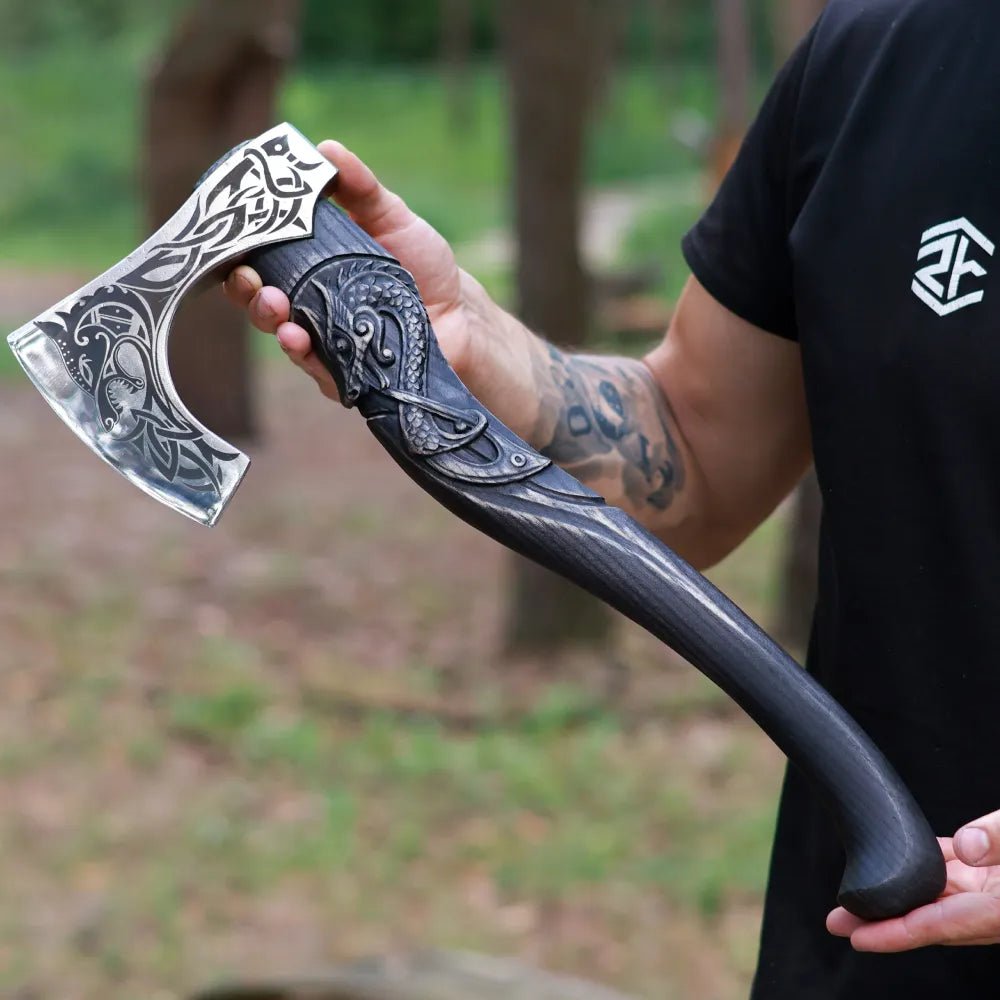
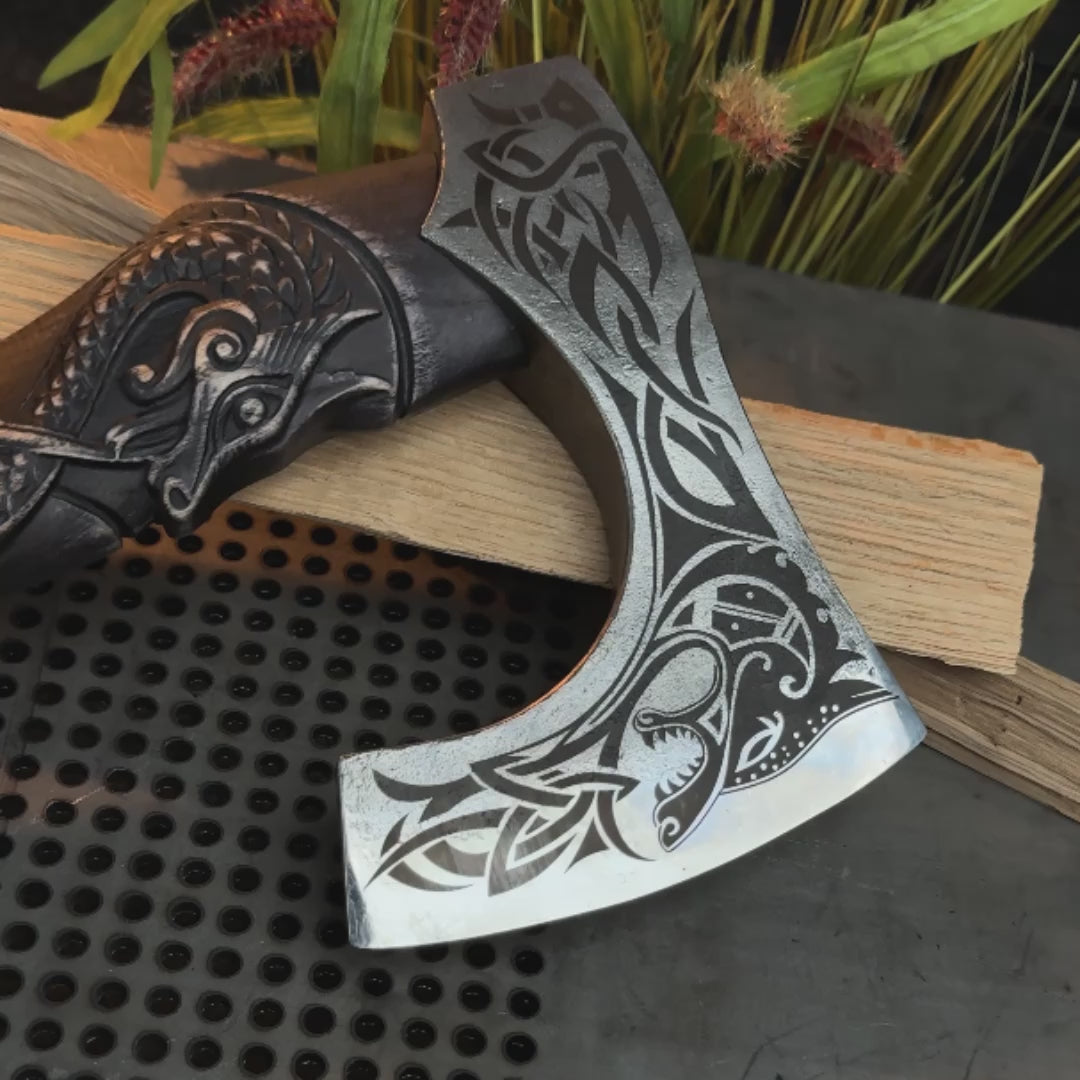
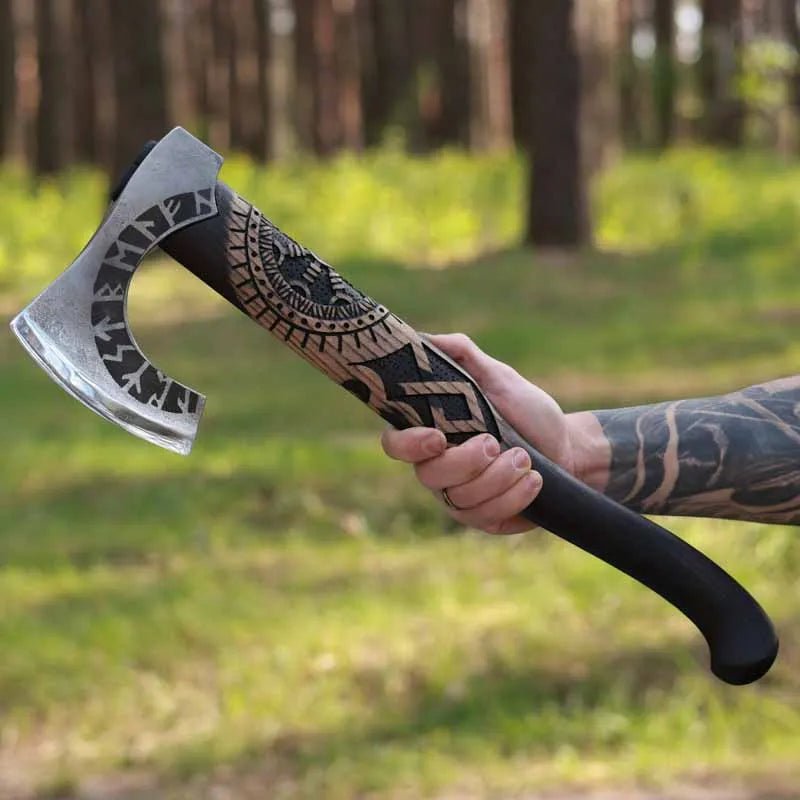
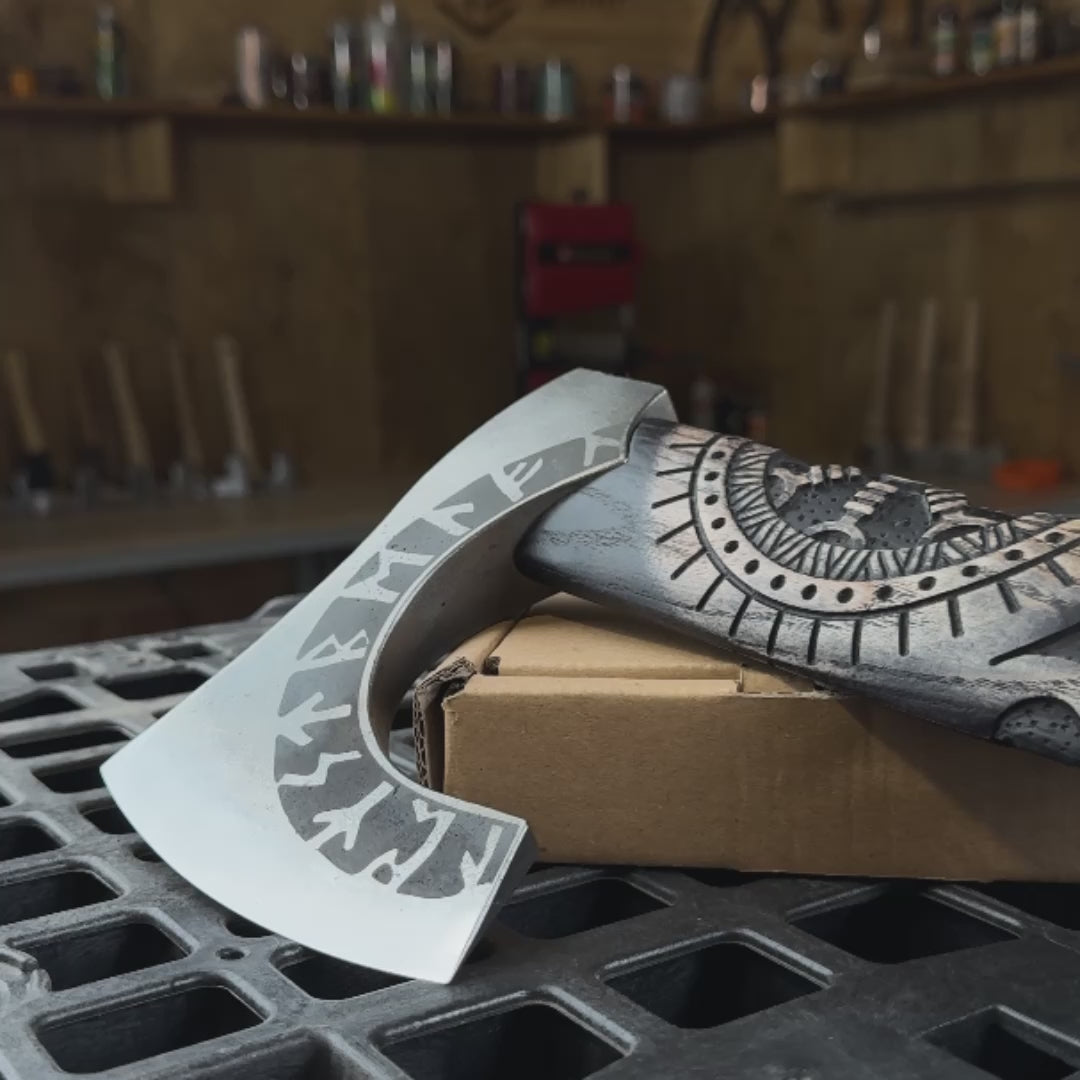
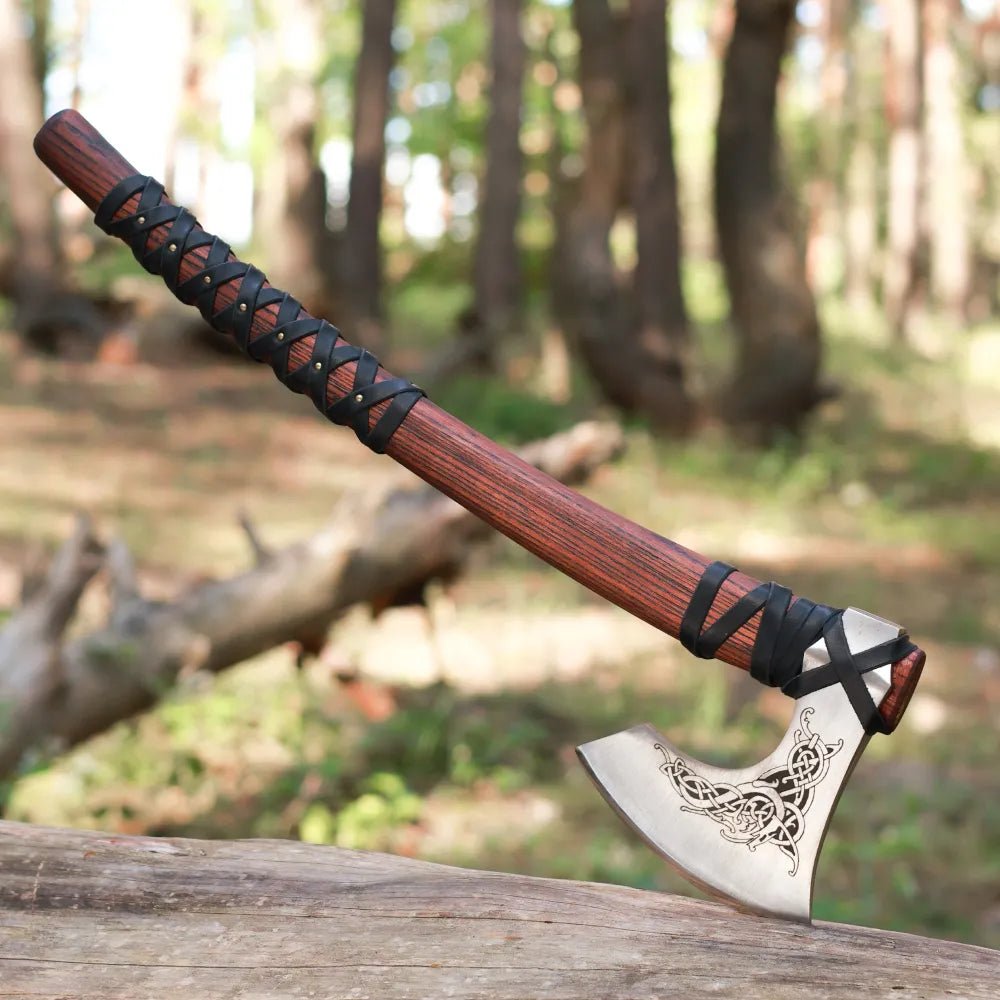
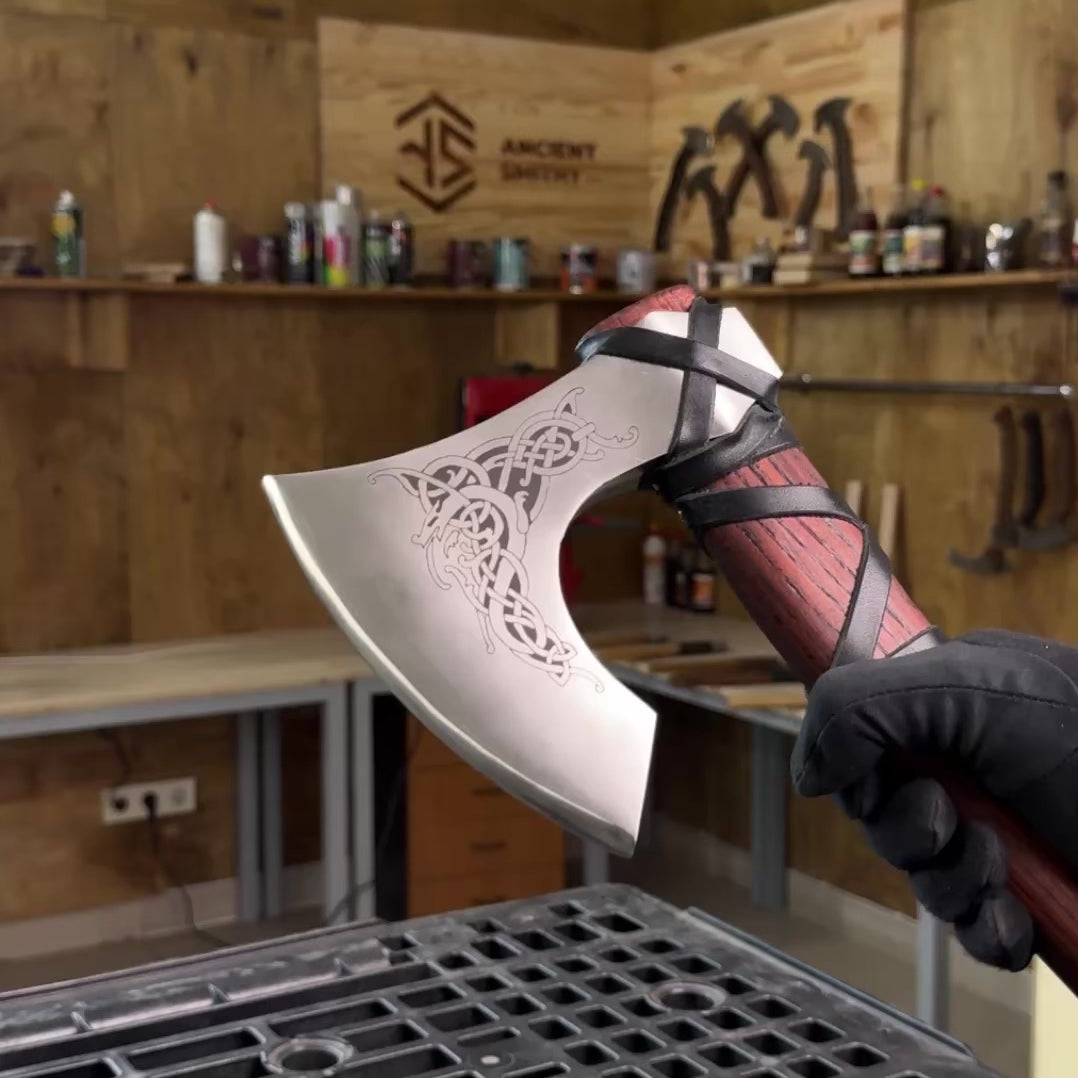
A bearded axe is defined by the extended lower portion of its blade, often referred to as the “beard.” Unlike a standard axe head, where the cutting edge ends evenly, a bearded axe drops lower toward the handle, creating a longer cutting surface without significantly increasing weight.

Historically, bearded axes were widely used by Norse warriors and settlers. The design allowed them to achieve powerful cuts while maintaining excellent control – a crucial advantage in combat, woodworking, and daily survival tasks.
Why Bearded Axes Are So Effective
One of the biggest advantages of bearded axes is control. The extended blade allows the user to choke up on the handle, gripping closer to the head. This grip gives far greater precision than a standard axe, making detailed cuts, carving, and controlled chopping much easier.

At the same time, the blade’s shape shifts weight forward into the cutting edge. This improves cutting efficiency without the need for a heavier head. In practical terms, a bearded axe often feels more aggressive and responsive than a traditional straight-bladed axe.
The Difference Between a Bearded Axe and a Regular Axe
A regular axe typically prioritizes simplicity and balance for general-purpose chopping or splitting. Its blade profile is compact, and the cutting edge is shorter. This makes it effective for repetitive, heavy-duty tasks but less adaptable for precision work.
Bearded axes, by contrast, offer versatility. The longer blade edge increases contact with wood, while the cutout near the handle reduces unnecessary weight. This combination makes the axe feel faster, more agile, and more expressive in use.

Visually, the difference is just as striking. Bearded axes carry a bold, unmistakable silhouette that immediately sets them apart – especially in long Viking bearded axe designs, where the extended handle amplifies both reach and authority.
The Long Viking Bearded Axe
The long Viking bearded axe is perhaps the most iconic variation. With an elongated handle and dramatic blade profile, it was historically used both as a weapon and as a tool. The length provided reach in battle, while the bearded blade allowed for hooking shields, controlling opponents, and delivering devastating cuts.

Today, this form is admired not only for its historical significance but also for its presence. Long Viking bearded axes are often chosen as centerpiece items – functional yet undeniably artistic.
Modern Uses of Bearded Axes
In modern settings, bearded axes are favored by bushcrafters, woodworkers, historical reenactors, and collectors. Their ability to handle fine carving, rough chopping, and controlled shaping makes them ideal for outdoor tasks and workshop use alike.

Collectors are drawn to bearded axes for their expressive form and historical authenticity. Craftsmen appreciate the way the design translates human movement directly into the cut. And enthusiasts value the sense of connection to ancient traditions of toolmaking.
Why Bearded Axes Continue to Grow in Popularity
As interest in handmade tools and traditional craftsmanship grows, bearded axes stand out as a perfect blend of beauty and performance. They are not just tools – they are statements. Each curve of the blade reflects centuries of refinement, shaped by real-world use rather than theory.

Whether displayed, gifted, or used in the field, bearded axes carry a character that standard axe designs simply cannot replicate. Their growing popularity is no coincidence – it’s a rediscovery of a design that was always ahead of its time.
A bearded axe is not merely an alternative to a regular axe. It is a different philosophy altogether – one that values control, expression, and the harmony between hand, steel, and purpose.