
How Axe Balance Changes Performance
When people choose an axe, they often focus on size, blade shape, or total weight. But experienced users know that one factor influences performance more than almost anything else – balance. The way weight is distributed across an axe determines how it swings, how accurately it strikes, and how comfortable it feels after repeated use.
Two axes may weigh exactly the same, yet feel completely different in the hand. One may feel natural and effortless, while the other feels awkward or tiring. The difference lies in balance.
What “Axe Balance” Actually Means
Balance refers to how the weight of the axe is distributed between the head and the handle. In most axes, the center of gravity sits closer to the head, allowing the tool to generate cutting power during a swing. However, the exact position of this balance point varies depending on the type of axe and its intended purpose.

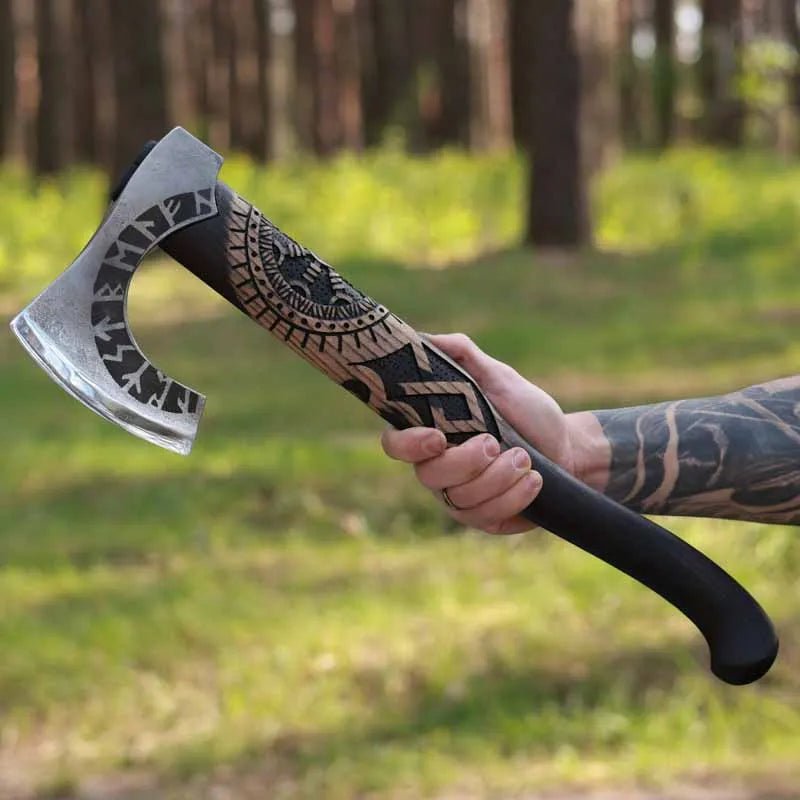
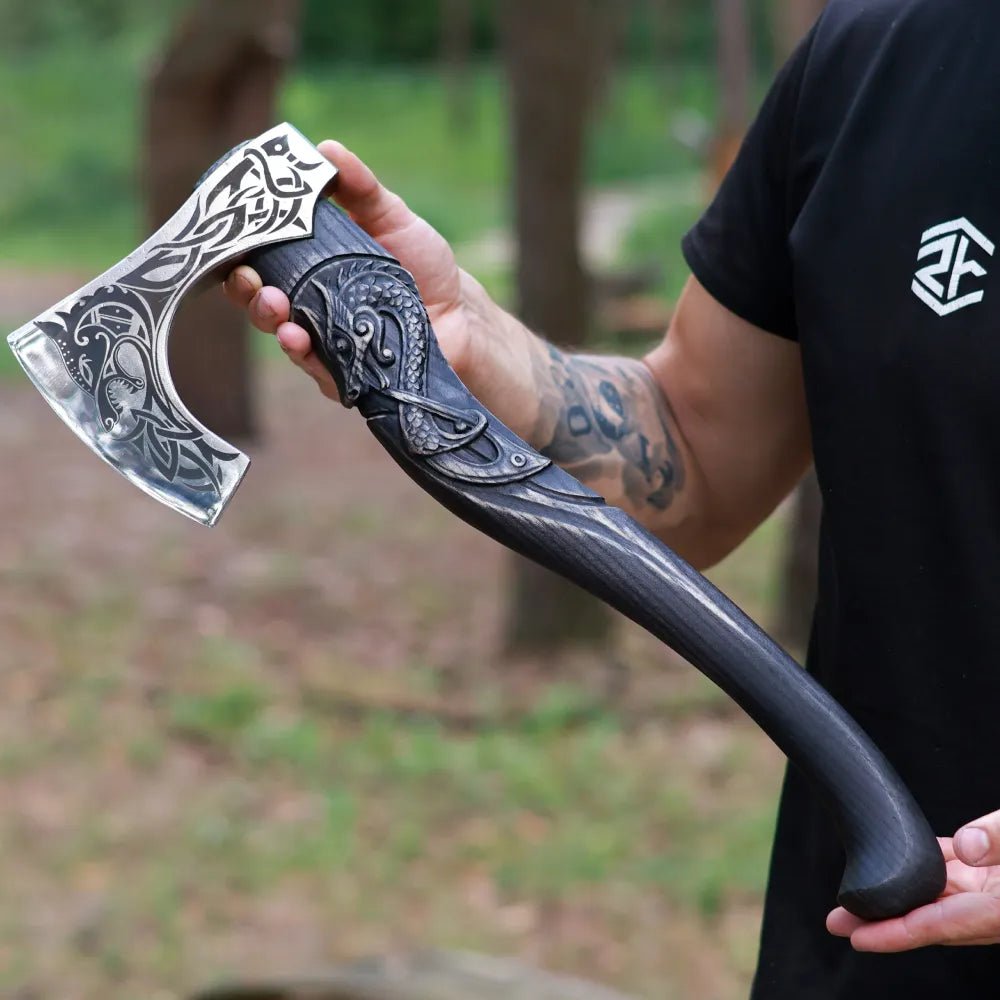
A well-balanced axe should feel like an extension of your arm. The swing flows naturally, and the head follows a predictable path. Poor balance, on the other hand, makes the axe harder to control and increases fatigue.
Forward Balance: Maximum Cutting Power
Axes designed for chopping typically have a balance point closer to the head. This forward-weighted design increases momentum during the swing, allowing the blade to bite deeper into wood.
Classic working axes often use this type of balance. Their heads are slightly heavier relative to the handle, giving them strong cutting force while still maintaining control. This makes them effective for tasks like splitting wood or processing logs.

The trade-off is that forward-heavy axes require a bit more effort to maneuver quickly, but the added power makes them ideal for demanding work.
Neutral Balance: Control and Versatility
Some axes are designed with a more neutral balance, where the weight is distributed more evenly between the head and the handle. This creates a tool that feels lighter and easier to guide.
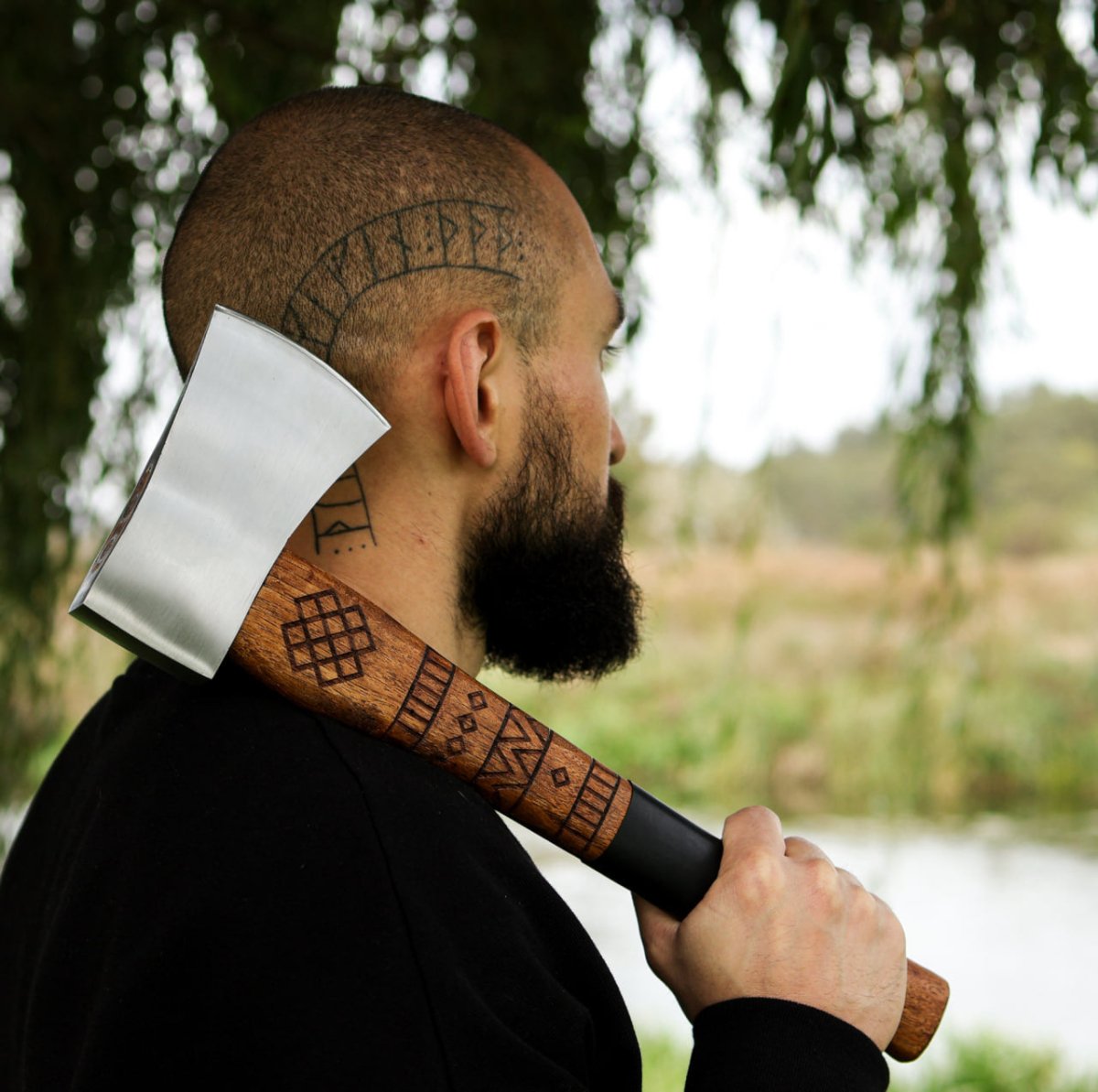
Tomahawks are a good example. Their heads are usually more compact, and the handle length is optimized for quick, controlled movements. This allows the user to perform a wide range of tasks – from chopping small branches to precise cuts – without excessive fatigue.

Because of their versatility and maneuverability, tomahawks often feel extremely responsive in the hand.
Balanced for Throwing: Precision and Rotation
Throwing axes require a very specific balance. When an axe is thrown, it rotates through the air before striking the target. The distribution of weight determines how smoothly and predictably this rotation happens.
A throwing axe is typically designed so that the weight is concentrated enough in the head to allow rotation, but not so heavy that the throw becomes difficult to control. The handle length also plays an important role, helping the axe rotate at the right speed.

When balance is correct, the axe rotates smoothly and lands with the blade facing forward. Poor balance can cause unstable rotation or unpredictable impacts.
Double-Bit Axes: Symmetry and Stability
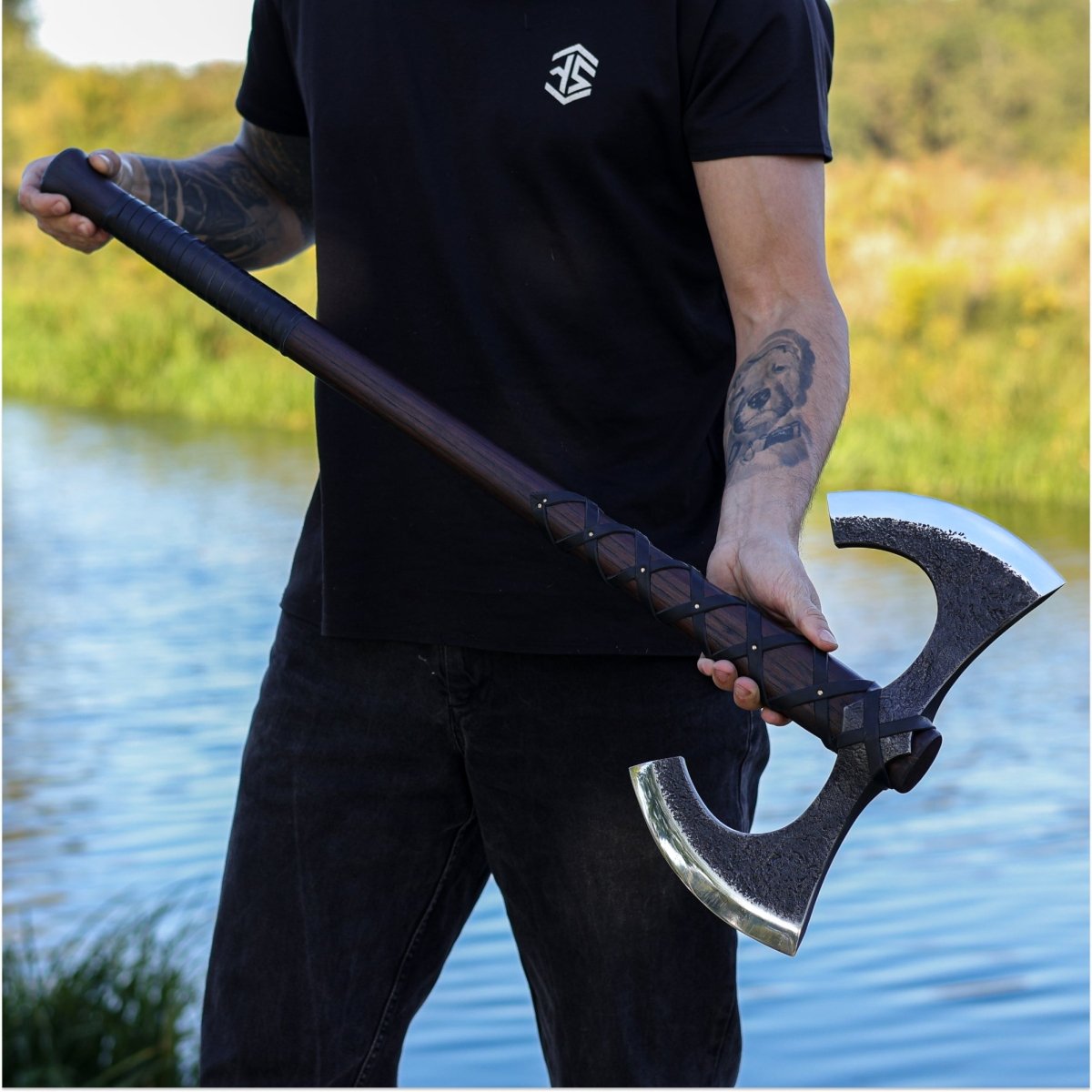
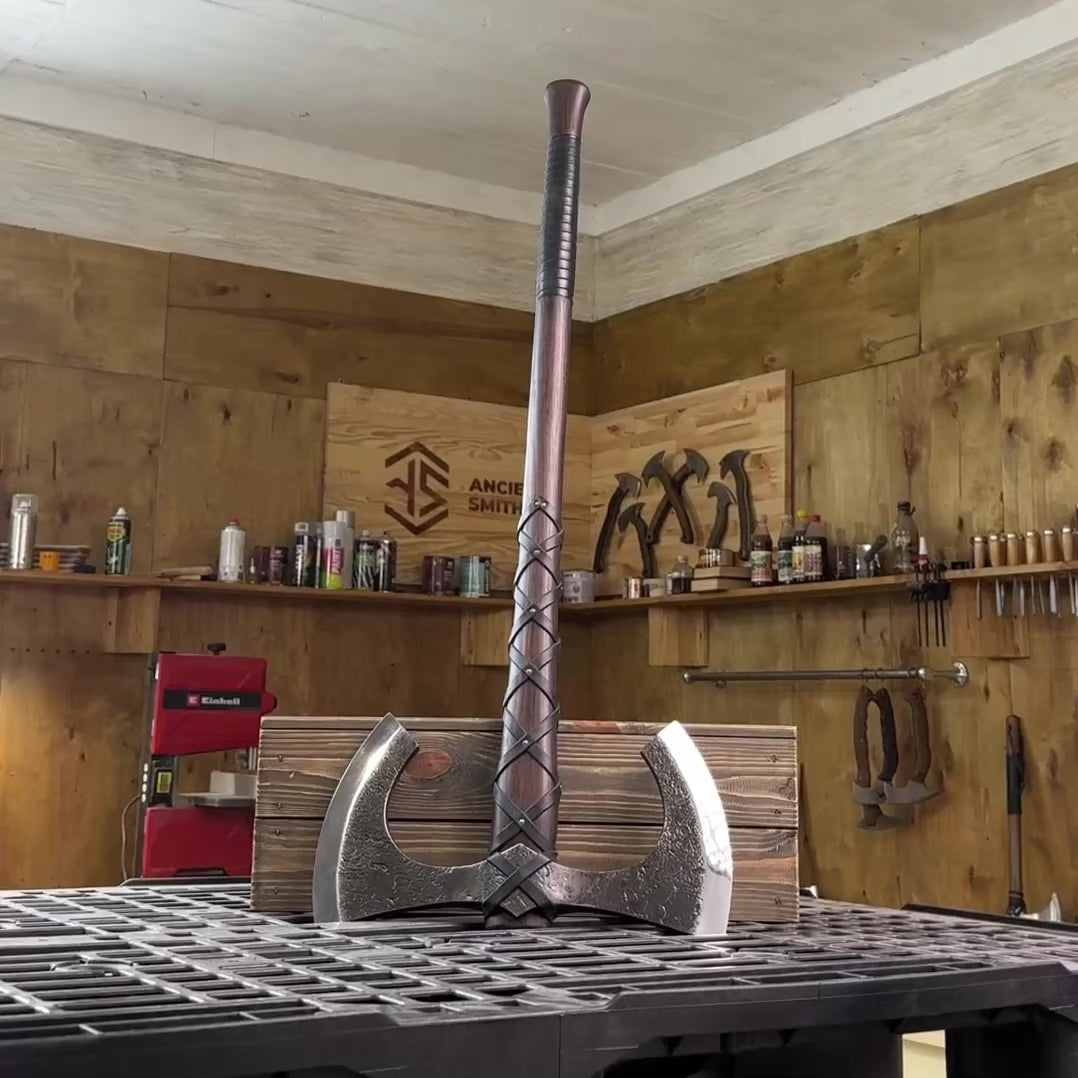
Double-bit axes present a unique balance challenge because they feature two cutting edges instead of one. This design creates a more symmetrical distribution of weight across the head.
The result is a very stable swing. Because the weight is evenly spread, the axe moves smoothly through the arc of a strike. Many experienced users appreciate this stability, especially for precise chopping tasks.

The double edge also offers practical benefits – one edge can be kept extremely sharp for clean cuts, while the other can be used for heavier work.
Why Balance Matters More Than Weight
Many people assume a heavier axe will automatically perform better. In reality, a poorly balanced heavy axe can feel clumsy and exhausting. A lighter but well-balanced axe can often deliver better results because it allows the user to swing more naturally and maintain control.
The right balance makes an axe feel alive in your hands. It guides the motion of the swing, reduces strain on the arms, and improves accuracy.
Finding the Right Balance for You
The ideal balance depends on how the axe will be used. A classic chopping axe benefits from forward weight and power. A tomahawk emphasizes agility and control. A throwing axe must rotate predictably, while a double-bit axe provides symmetrical stability.
Understanding balance helps explain why different axe styles exist in the first place. Each design shifts the center of gravity slightly to match its purpose.
When the balance is right, the axe stops feeling like a tool and starts feeling like a natural extension of your movement – and that is where true performance begins.