
Why Some Axes Have a Wedge – and Others Don't
One of the questions we receive most often is: "Why do some of your axes have a wedge in the handle, while others don't?"
The short answer is simple: both methods are traditional, both are reliable, and each is designed for a different type of axe. Let's take a closer look at how they work!
The Traditional Wedged Axe
Most classic axes use a wooden handle that passes through the eye of the axe head from below. Once the head is in place, a wooden (and sometimes metal) wedge is driven into the top of the handle.
The wedge expands the wood inside the eye, locking the head securely in place.

This mounting method has been used for centuries because it creates an extremely strong connection between the handle and the head, especially for larger axes that generate significant force during chopping.
Advantages of a Wedged Axe:
- Extremely secure for heavy chopping and splitting.
- Ideal for larger working axes and Viking axes.
- Traditional construction trusted for centuries.
- If necessary, the handle can be replaced by removing the old wedge and installing a new one.

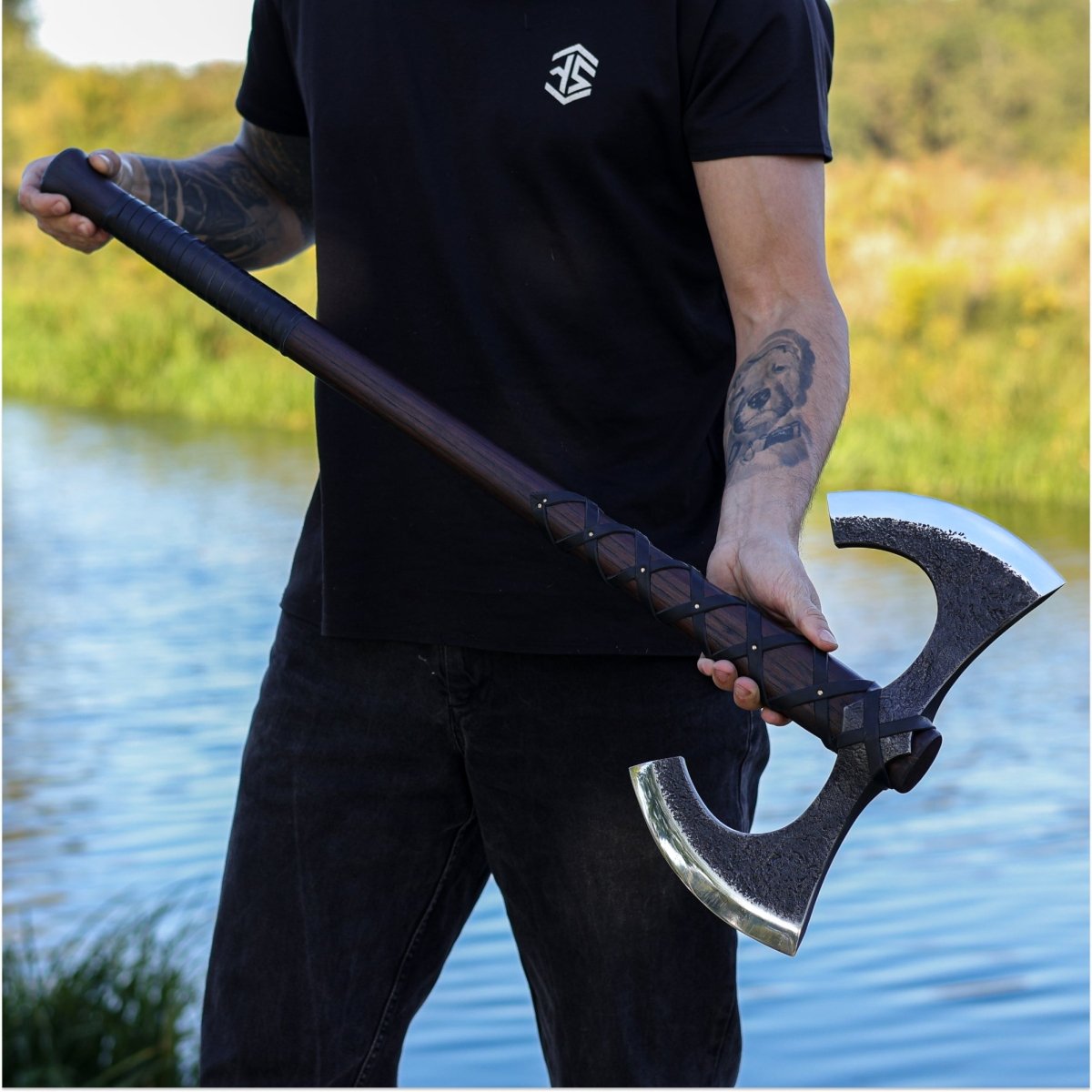
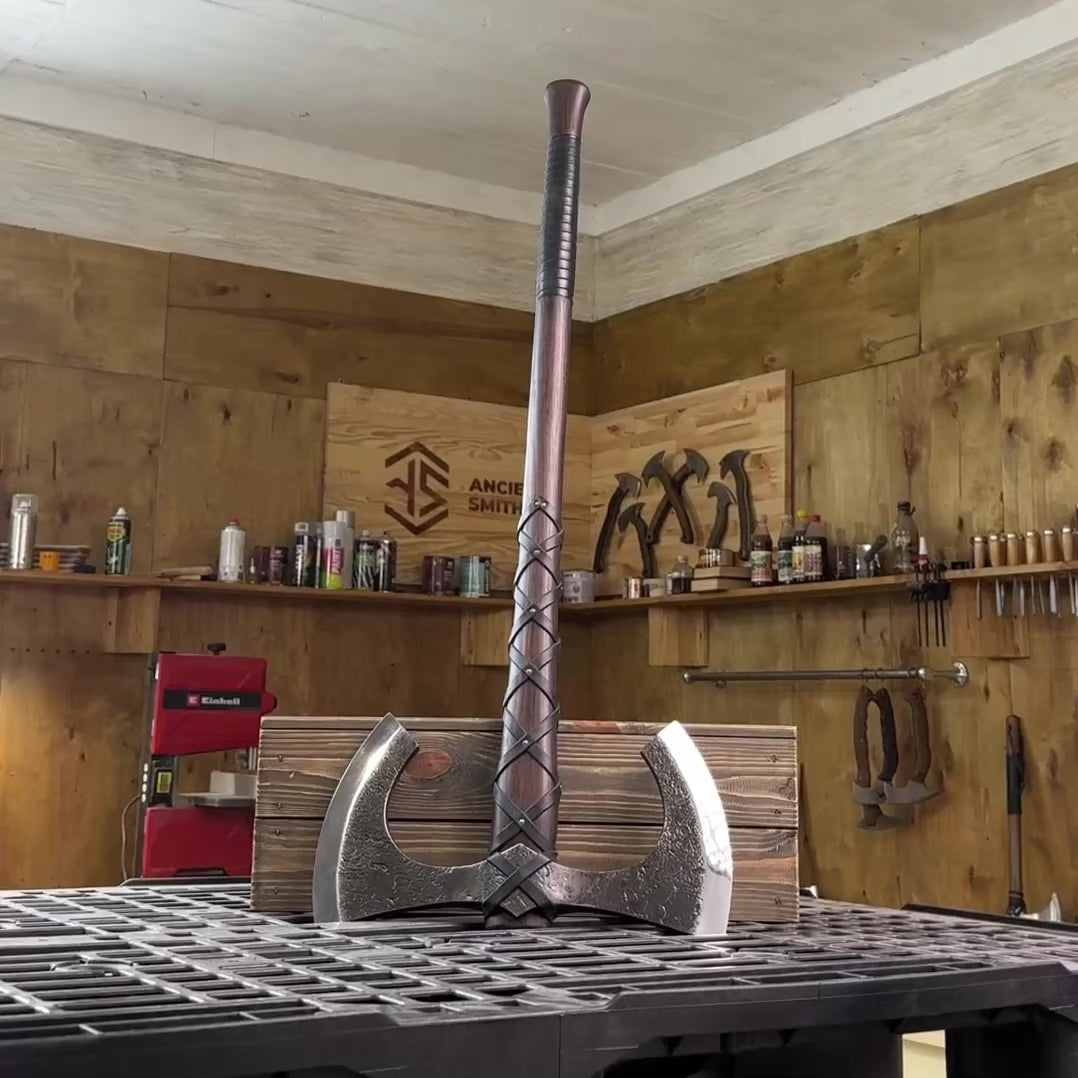
This is why you'll find wedges on many of our Viking axes, Leviathan-style axes, hammers and other full-sized models.
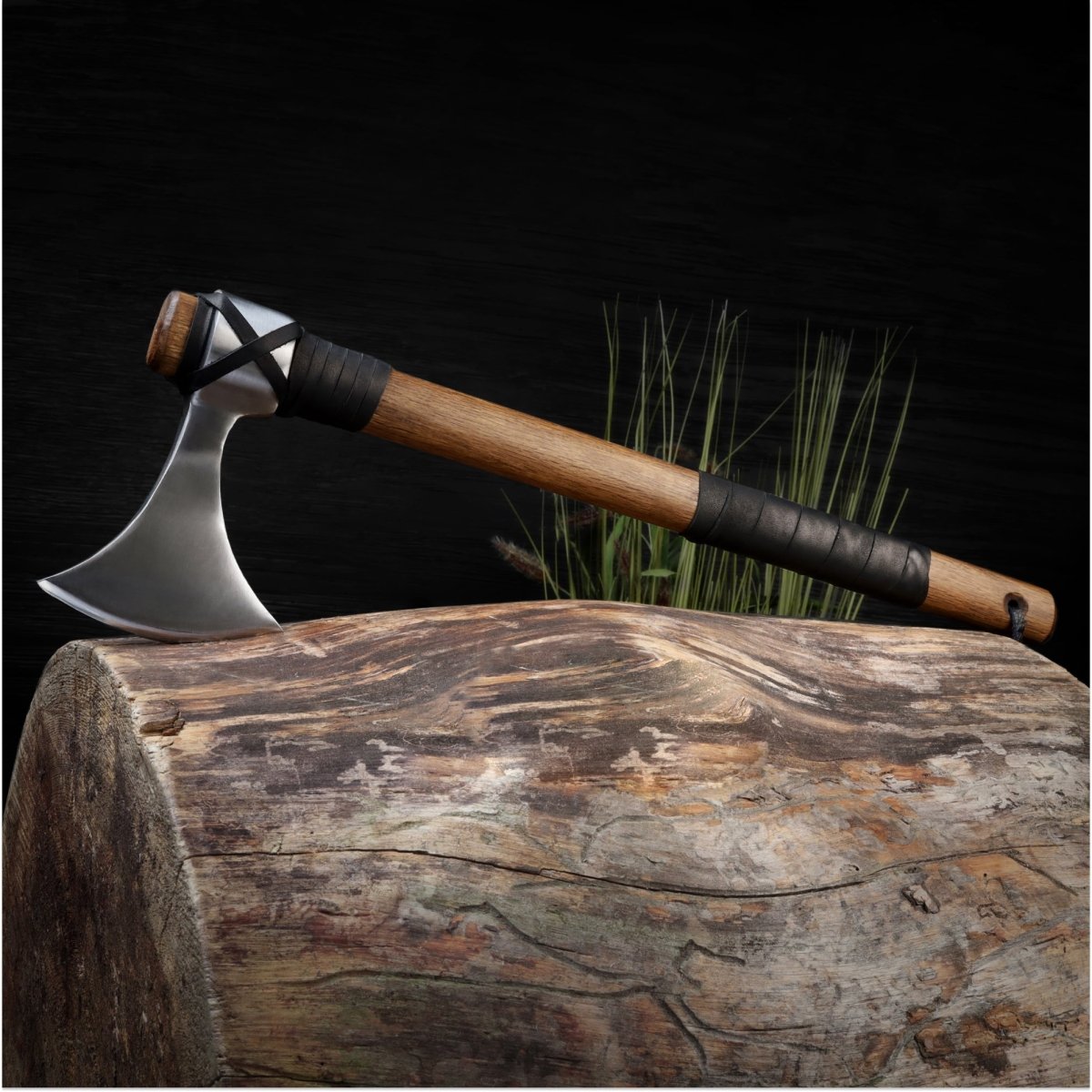
The Classic Tomahawk Design
Tomahawks use a completely different philosophy.
Instead of locking the head with a wedge, the wooden handle is tapered. The head slides onto the handle from the top and naturally stops at the widest point.

At first glance, this may seem unusual, but it's actually a centuries-old design used by Native American tomahawks and later adopted by many military and utility tomahawks.
The clever part is that the harder you use the tomahawk, the tighter the head seats itself onto the handle.

Each impact pushes the head slightly farther toward the thicker part of the handle, creating an even more secure fit.
In other words, the tool tightens itself through normal use.
"My Tomahawk Head Moved Slightly – Is That Normal?"
Yes.
Because the head is designed to seat itself naturally, you may occasionally notice a tiny amount of movement, especially after shipping or changes in humidity.
This is completely normal.

If you'd like to reseat the head, simply turn the tomahawk upside down and tap the bottom of the handle firmly against a solid, flat surface several times. Gravity and the tapered design will allow the head to slide into its optimal position.
No wedge, glue, or complicated adjustment is required.
Why Doesn't Every Axe Use This System?
Each design was created for a different purpose:
- A large felling axe generates tremendous downward force and benefits from a permanently wedged head.
- A tomahawk, on the other hand, was historically designed to be lightweight, portable, and easy to maintain. If the handle was ever damaged, it could be replaced quickly without specialized tools.

Neither system is better – they simply solve different problems.
Which One Is Right for You?
Choose a wedged axe if you want:
- A traditional full-sized axe.
- Maximum stability for heavy chopping.
- A classic construction used on working and Viking axes.
Choose a classic tomahawk if you want:
- A lightweight and versatile tool.
- Easy maintenance and handle replacement.
- A self-tightening design with centuries of proven history.
Two Designs. One Goal.
Whether your axe uses a wedge or a traditional tomahawk mount, both systems have stood the test of time.
At AncientSmithy, we choose the mounting method based on the purpose of the tool – not simply tradition or appearance. Every axe and tomahawk is built using the construction that best suits its intended use, ensuring reliability, durability, and an authentic feel in the hand.
Sometimes the oldest engineering solutions are still the smartest ones.