


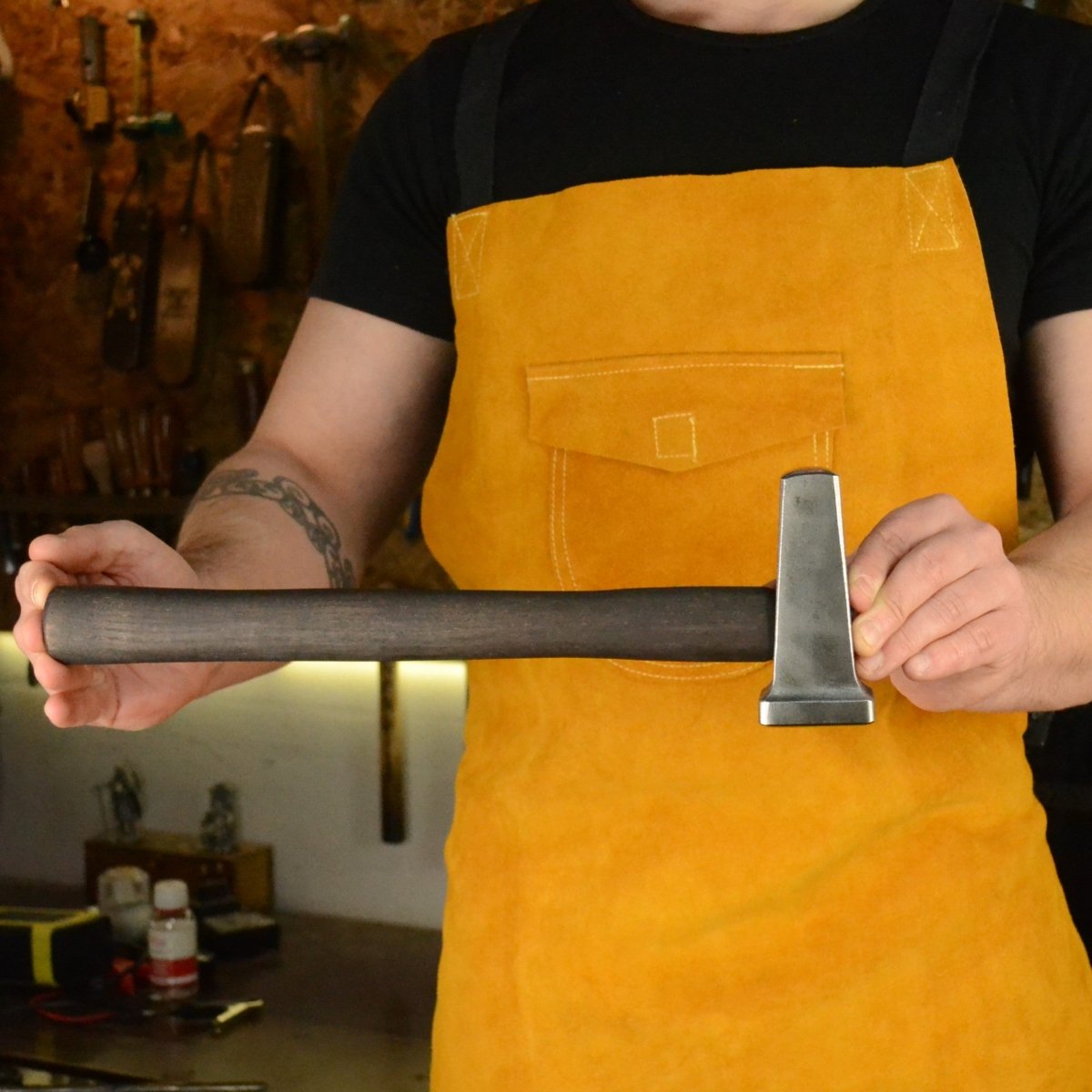
Handwerk vs. Maschine: Wie moderne Schmiede Tradition und Technologie vereinen
Schmieden war nie in der Zeit eingefroren. Obwohl es tief in der Tradition verwurzelt ist, hat es sich immer zusammen mit den verfügbaren Werkzeugen des Schmieds weiterentwickelt. Das Bild eines einsamen Handwerkers, der heißes Stahl von Hand schlägt, ist immer noch sehr real. – aber in der modernen Schmiede existiert es oft neben Kraftschmiedehammern, Gas-Schmiedefeuern, Pressen und Präzisionsschleifern.
Das ist kein Widerspruch. Es ist Balance. Modernes Schmieden bedeutet nicht, zwischen Handschmieden und Maschinen zu wählen. Es bedeutet zu wissen, wann welches im Prozess seinen Platz hat.
Die menschliche Hand führt immer noch
Handschmieden bleibt die Seele des Handwerks. Es gibt keinen Ersatz für das Gefühl von Stahl unter dem Hammer, den Klang auf dem Amboss oder den Instinkt, der einem Schmied sagt, wann das Metall bereit ist, bewegt zu werden. – oder wenn es mehr Hitze braucht.

Diese Momente können nicht automatisiert werden. Handarbeit erlaubt subtile Anpassungen, die Maschinen einfach nicht verstehen: Symmetrie korrigieren, Balance verfeinern, Übergänge glätten und Werkzeuge so formen, dass sie sich in der Hand richtig anfühlen. Hier zählt Erfahrung am meisten, und hier wird jedes Stück einzigartig.
Selbst in einer modernen Werkstatt wird die endgültige Form eines Werkzeugs fast immer von Hand bestimmt.
Wo Elektrowerkzeuge ihren Platz verdienen
Das heißt, moderne Werkzeuge gibt es aus gutem Grund. Dickes Stahl vollständig von Hand zu ziehen ist anstrengend, zeitaufwendig und unnötig. Kraftschmiedehammer und Pressen ermöglichen es Schmieden, Metall effizient, sicher und gleichmäßig zu bewegen. – besonders in den frühen Phasen des Schmiedens.
Gas-Schmiedefeuer bieten stabile, kontrollierbare Hitze. Präzisionsschleifer helfen, saubere Geometrien zu erreichen. Diese Werkzeuge nehmen nicht die Handwerkskunst weg; sie nehmen unnötige Belastung und Wiederholungen ab.

Richtig eingesetzt gibt Technologie Schmieden mehr Energie und Fokus für die Arbeit, die tatsächlich Qualität definiert. – die Details, die Balance, der Feinschliff.
Das wahre Handwerk geschieht dazwischen
Die besten modernen Schmiede verlassen sich nicht vollständig auf Maschinen, lehnen sie aber auch nicht ab. Sie bewegen sich fließend zwischen beiden Welten.
Die grobe Formgebung beginnt vielleicht unter einem Krafthammer, aber die letzten Anpassungen erfolgen am Amboss. Eine Presse kann das Fundament formen, aber Handhiebe verfeinern die Persönlichkeit des Stücks. Technologie beschleunigt den Prozess; Handwerkskunst vollendet ihn.

Dieser Ansatz bewahrt die Individualität jedes Werkzeugs und erfüllt gleichzeitig moderne Standards in Stärke, Genauigkeit und Zuverlässigkeit.
Warum diese Balance heute wichtig ist
Menschen kaufen heute nicht nur Werkzeuge – sie suchen nach Bedeutung, Authentizität und Vertrauen. Ein vollautomatisiertes Produkt mag effizient sein, aber es wirkt leer. Ein rein handgeschmiedeter Prozess ohne moderne Unterstützung mag romantisch sein, kann aber Konsistenz und Leistung opfern.

Die Balance zwischen Tradition und Technologie ermöglicht es modernen Schmieden, Werkzeuge zu schaffen, die:
- funktional unter realen Bedingungen
- konstant, ohne sich massenproduziert anzufühlen
- effizient, ohne Charakter zu verlieren
- in der Geschichte verwurzelt, aber für heute gebaut
So bleibt das Schmiedehandwerk im 21. Jahrhundert relevant.
Die Philosophie von AncientSmithy
Bei AncientSmithy glauben wir, dass Maschinen den Handwerker unterstützen sollten. – Sie werden niemals ersetzt. Wir verwenden moderne Ausrüstung, wo es sinnvoll ist, aber jede Axt, jeder Hammer und Tomahawk wird von Hand fertiggestellt, verfeinert und ausbalanciert.

Dieser letzte menschliche Touch verleiht einem Werkzeug seine Seele. Es ist der Unterschied zwischen etwas, das funktioniert, und etwas, das seinem Besitzer gehört.
Feuer, Stahl und Können führen immer noch den Weg. Die Technologie geht einfach neben ihnen her.